


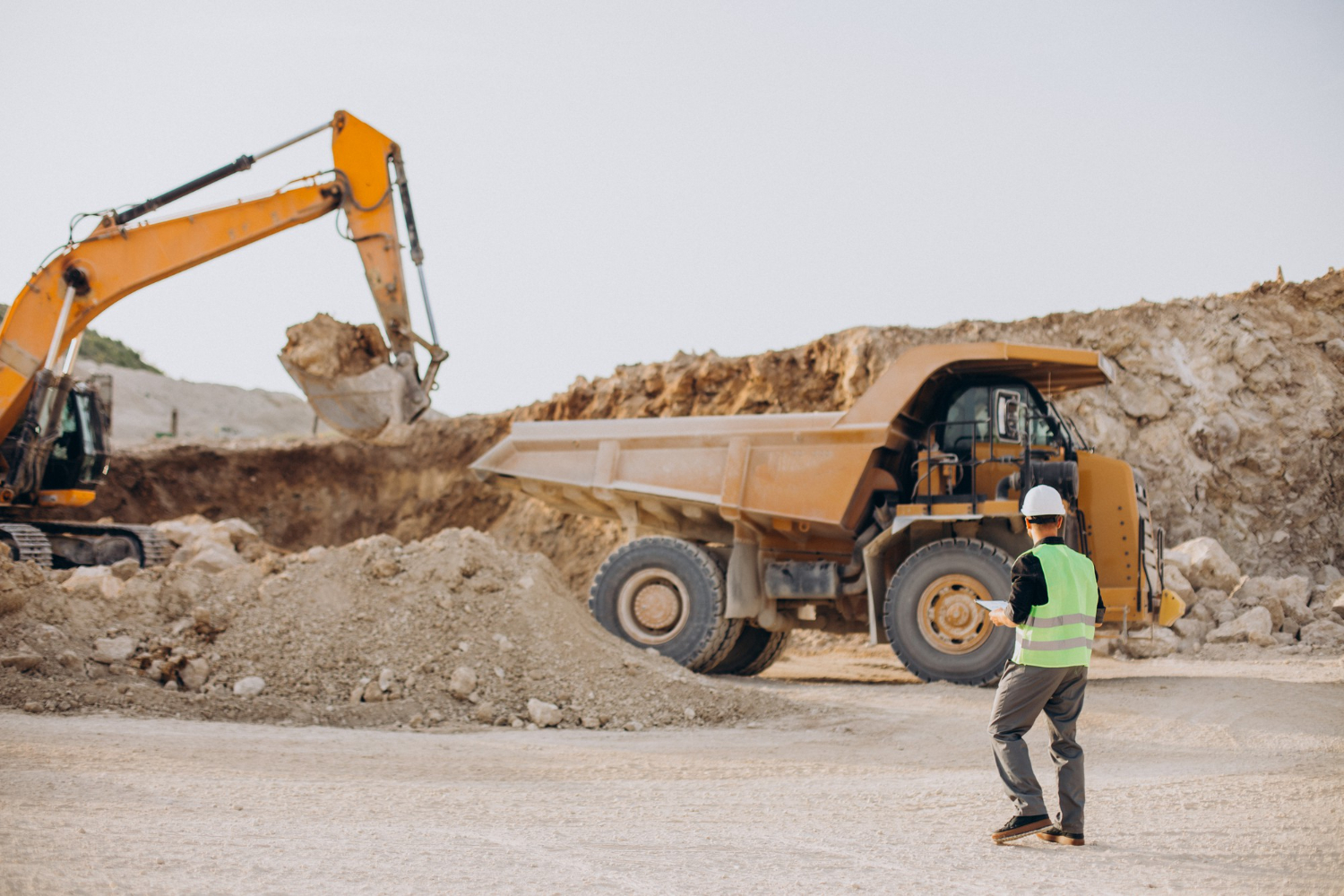
Bulk Commodity Logistics in South Africa: The Complete 2026 Guide for Mining Operations
South Africa's mining sector is one of the country's most important economic pillars — and road transport logistics is the often-invisible system that keeps it functioning. Coal from Mpumalanga's coalfields powers Eskom's generating stations. Manganese from the Northern Cape's Kalahari basin feeds global steel production. Chrome from the Bushveld Igneous Complex supplies the world's ferrochrome industry. Petroleum from coastal refineries fuels the equipment that extracts it all.
Getting these commodities reliably from source to end-user is a complex, regulated, and operationally demanding undertaking. In 2026, with commodity demand recovering and South Africa's mining sector showing renewed production momentum, the pressure on bulk logistics providers has intensified. Mining companies are demanding more: higher compliance standards, better route reliability, faster incident response, and increasingly, meaningful B-BBEE and ESD credentials.
This guide provides a comprehensive overview of bulk commodity road logistics for South African mining operations — covering the specific requirements of each major commodity type, the compliance framework all providers must meet, fleet and driver considerations, SLA best practices, and how to select a logistics partner that can genuinely perform under the demands of a mining environment.
1. Coal Transport: South Africa's Most Critical Bulk Commodity Movement
South Africa remains a significant global coal producer and one of the world's largest coal exporters. The country's domestic coal supply chain is equally critical — Eskom's coal-fired power stations consume millions of tonnes annually, and coal-to-liquids facilities, coke ovens, and industrial consumers add further demand.
The logistics chain for coal is predominantly driven by road freight for mine-to-rail, mine-to-power-station, and mine-to-industrial-consumer movements. Mpumalanga is the heartland of South Africa's coal mining industry — and the road routes from its collieries to consumers across Gauteng, the Free State, and KwaZulu-Natal are among the most heavily utilised heavy freight corridors in the country.
Key logistics requirements for coal road transport include bulk tipping vehicle configurations (typically side-tipping or end-tipping) with payload capacities matched to the route's legal axle load limits; strict axle load compliance management — coal's density makes overloading a constant risk if loads are not carefully calculated; driver familiarity with mine-site safety protocols and loading procedures specific to each colliery; route knowledge including weigh-bridge locations, seasonal road quality variations, and permit requirements; and delivery scheduling coordination with power station or plant receiving schedules, which are typically tightly managed.
Operational reliability is paramount. A coal delivery failure to a power station is not merely a logistics inconvenience — it can directly affect power generation output and creates significant commercial consequences for both the mine and the logistics provider.
2. Manganese and Chrome Logistics: Specialist Bulk Mineral Haulage
South Africa holds the world's largest known manganese reserves, concentrated in the Kalahari Manganese Field near Hotazel and Kuruman in the Northern Cape. Getting this high-density ore from mine to processing facility — and from processing facilities to export ports at Richards Bay and Durban — requires a logistics operation with specific bulk mineral expertise.
Manganese ore is significantly denser than coal, creating particular challenges in load configuration. A vehicle loaded to its volumetric capacity with coal would be legally underloaded with manganese ore — and a vehicle loaded to manganese ore's volumetric capacity would almost certainly be overloaded in terms of axle weight limits. Precise load planning that accounts for commodity density, vehicle configuration, and route-specific axle load regulations is essential for every manganese transport movement.
Chrome logistics presents a related but distinct challenge. South Africa's chrome reserves are concentrated in the Bushveld Igneous Complex, and the logistics demands differ between chrome ore (which requires bulk tipping configurations similar to coal) and ferrochrome (which is produced at smelters and requires specific handling based on its form — either as bulk alloy or in packaged grades for specialised applications). Logistics providers handling both chrome ore and ferrochrome must maintain flexible vehicle configurations and driver training that spans both products.
Documentation requirements for both manganese and chrome are more complex than for coal — particularly for export-bound movements, which require commodity tracking documentation, port authority coordination, and in some cases customs documentation for cross-border movements.
3. FMCG and Farm Produce Transport: The Supply Chain That Feeds South Africa
Not all bulk commodity logistics is measured in tonnes of ore. South Africa's agricultural and FMCG supply chains represent some of the highest-volume, most time-sensitive road freight movements in the country — and they present their own specific logistics requirements.
Farm produce transport is characterised by extreme time-sensitivity. Fresh produce has a narrow window between harvest and market — typically 24 to 72 hours for perishables, slightly longer for packaged produce. A delayed delivery doesn't just cost money — it destroys the product. Effective farm produce logistics requires precise scheduling and scheduling buffers for farm access road delays; appropriate vehicle configurations for the specific produce type; loading and offloading coordination with farms, packhouses, and distribution centres; and documentation including phytosanitary certificates and chain-of-custody records for export-grade produce.
FMCG transport shares the time-sensitivity of farm produce with the additional complexity of retail supply chain integration. Retailers and distributors manage inventory on just-in-time principles — a delayed FMCG delivery affects shelf availability, creates out-of-stock situations, and can trigger financial penalties under retail supplier SLAs. FMCG logistics providers must demonstrate consistent on-time delivery performance, flexible scheduling, and the communication infrastructure to proactively manage delays before they affect store operations.
4. Compliance Framework: What Every SA Bulk Logistics Provider Must Meet
Across all bulk commodity categories, South Africa's road freight regulatory framework creates a set of non-negotiable compliance requirements that every provider must meet — and that every mining company or commodity business must verify before contracting.
At the vehicle and operator level: a valid Operator's Licence issued by the relevant provincial Regulatory Entity; Certificates of Roadworthiness (CoR) current for every vehicle in the fleet; appropriate vehicle configuration and load restraint systems for the commodity type; and for hazardous goods transport, ADR-compliant equipment and Dangerous Goods Operator registration.
At the driver level: Code 10 or Code 14 licences appropriate to the vehicle type; Professional Driving Permits (PDPs) with the correct endorsements for the commodity class; mine-site safety induction compliance for any driver accessing mine premises; and documented fatigue management compliance under the National Road Traffic Act's prescribed driving hour limits.
At the operational level: load documentation and consignment notes for every movement; weigh-bridge compliance documentation; route permit compliance for abnormal loads or restricted routes; and cargo insurance documentation covering the commodity type, value, and transit risk.
Mining companies that include systematic compliance verification in their logistics procurement process consistently experience fewer incidents, fewer disputes, and better operational performance than those who accept verbal assurances.
5. Selecting a Bulk Logistics Partner: The Decision Framework
The selection of a bulk logistics partner is one of the most consequential procurement decisions a mining or commodity business makes. The wrong choice creates operational disruption, compliance liability, and reputational damage that extends beyond the logistics relationship. The right choice creates a genuine operational partnership that reduces costs, improves reliability, and contributes to the mine's transformation objectives.
A rigorous logistics partner selection process should assess commodity-specific experience — can the provider demonstrate a verifiable track record with your specific commodity type, volumes, and routes? Fleet capability — is the fleet appropriately configured, well-maintained, and of sufficient scale to handle your volumes with contingency capacity? Driver competency — are drivers certified, trained, and compliant with your mine's specific induction and safety requirements? Compliance standing — can the provider produce current, complete compliance documentation across all categories? SLA structure — is the proposed contract clear, comprehensive, and appropriately balanced between performance obligations and escalation mechanisms? And transformation credentials — does the provider's B-BBEE status and ESD track record add value to your supply chain transformation programme?
The lowest price should never be the primary selection criterion for bulk commodity logistics. The true cost of a logistics failure — measured in production disruption, compliance incidents, cargo damage, and contractual penalties — almost always exceeds the cost difference between a compliant professional provider and a cheaper, less capable alternative.
Themba Liyeza: South Africa's Bulk Logistics Partner
Themba Liyeza Solutions is a specialist bulk commodity transport and logistics company with deep operational experience across South Africa's mining and commodity sectors. We transport coal, manganese, chrome, petroleum, farm produce, and FMCG across Mpumalanga, Limpopo, Gauteng, the North West, the Northern Cape, and beyond.
Our fleet is configured for bulk commodity haulage. Our drivers are trained, certified, and mine-site compliant. Our compliance documentation is maintained, current, and available for verification at any time. And our B-BBEE credentials and ESD partnerships create genuine transformation value for every mining company that contracts with us.
We have established long-term logistics relationships with leading mining operations including Sereti Mines, and we bring the route knowledge, operational discipline, and client commitment that mining supply chains demand.
If your operation is evaluating bulk logistics partners for 2026 and beyond — the conversation starts here.
📞 076 226 4955 | 📧 info@thembaliyeza.co.za | 🌐 www.thembaliyeza.co.za
📍 27 Rooth, Erasmus, Bronkhorstspruit, Gauteng